
BioCat
Products by Technology
All the tools you need to achieve accurate, reproducible results with confidence.

Product Categories
Browse Categories

Antibodies
Primary, secondary, and conjugated antibodies for research, imaging, and diagnostic applications.

Antibody & Protein Arrays
Multiplex arrays for simultaneous detection and quantification of proteins, cytokines, and biomarkers.
Biobank Products
Cryopreservation solutions, storage consumables, and sample tracking tools for biorepository management.
Biochemicals
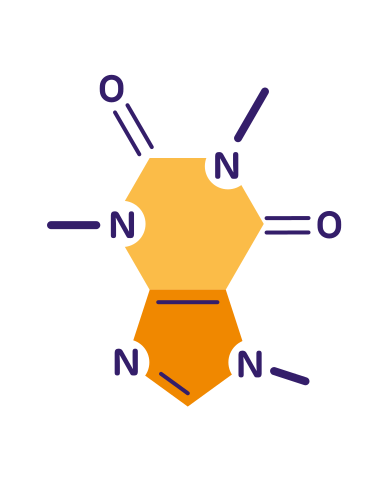
High-purity buffers, salts, solvents, and small molecules for laboratory and research use.
Cell-based Analysis
Assays and reagents for cell viability, proliferation, apoptosis, and functional phenotyping.
Cells & Cell Culture
Primary cells, cell lines, media, sera, and supplements for 2D and 3D culture systems.
Cloning & Expression Systems
Vectors, competent cells, and recombinant expression platforms for prokaryotic and eukaryotic protein production.

ELISA Kits
Genome editing reagents including CRISPR-Cas9 kits, guide RNAs, and donor templates for precise gene knockout, knock-in, and base editing.
Epigenetics Research Tools
Bisulfite conversion, ChIP, and methylation detection kits for studying DNA and histone modifications.
Extracellular Vesicles / Exosomes
Isolation, characterization, and functional analysis tools for exosomes and other extracellular vesicle subtypes.

Genome Engineering
CRISPR-Cas9 systems, guide RNA design tools, and editing reagents for precise genomic modification.

Instruments & Consumables
Laboratory instruments, automation platforms, and single-use consumables for research and diagnostic workflows.
Metabolism & Oxidative Stress
Assay kits for measuring metabolic activity, ROS, antioxidants, and mitochondrial function.
NGS - Next Generation Sequencing
Library preparation, target enrichment, and sequencing kits for whole-genome, exome, and RNA-seq workflows.
PCR & qPCR
Polymerases, master mixes, primers, and probes for conventional, real-time, and digital PCR workflows.
Proteins
Recombinant proteins, cytokines, growth factors, and enzymes for biological and biochemical research.

Sample Preparation
DNA, RNA, and protein extraction kits, columns, and reagents for clean, high-yield sample isolation.
Sanger Sequencing
Sequencing reagents, cycle sequencing kits, and cleanup solutions for capillary electrophoresis-based analysis.

Services
Custom antibody generation, sequencing, protein production, and assay development offered as contract services.