
DriverMap AIR TCR/BCR Profiling Kits — Bulk and Single Cell | BioCat
Profile all 7 TCR and BCR chains in a single day — no specialised platform required
Understanding the adaptive immune response means knowing which T-cell and B-cell clones are present, how abundant they are, and whether they are activated. Most TCR/BCR assays make you choose between chains or sacrifice sensitivity to get there.
DriverMap AIR covers all 7 T-cell receptor (TCR) and B-cell receptor (BCR) chains simultaneously — in a single tube, in a single day — starting from RNA or DNA. No microfluidic platform. No complex barcoding. Just quantitative, reproducible clonotype data you can trust.
Available for bulk profiling (any immune sample type) and single-cell profiling (FACS-sorted T or B cells). Compatible with human, mouse, and hybrid samples.
What makes DriverMap AIR more sensitive and reproducible than other AIR assays?
- Gene-specific primers are used for DriverMap™ Multiplex PCR technology which significantly reduce the level of non-specific binding and primer-dimer amplification products, and are designed to target only TCR/BCR isoforms.
- Validator barcodes (VBCs) facilitate accurate quantitation of the copy number of cDNA or DNA molecules in amplification steps, as well as detection of low abundance clonotypes and correction of amplification biases and sequencing errors.
- Dual-index amplicon labeling strategy minimizes index hopping during NGS allowing for comprehensive readouts.
- Full profiles of the antigen-recognition CDR3 region enable assessment of CDR3 length distribution, V(D)J segment usage, isotype composition for BCRs, somatic mutations, and similar characteristics with immune receptor profiling software such as MiXCR (MiLabs).
- Single-cell AIR profiling avoids the microfluidic platform costs, complex barcoding, and expensive reagents that make most scTCR/BCR workflows prohibitive for standard labs.
How It Works
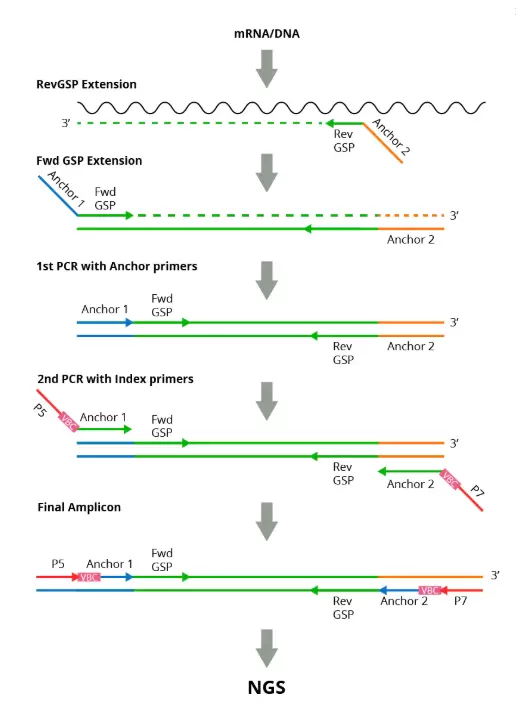
Bulk Assay: Start from human or mouse RNA or DNA — whole blood, PBMCs, cancer biopsies, FFPE, or dried blood microsamples. 7-step library prep completable in a single day. Sequence on Illumina NextSeq or NovaSeq.
Single-cell Assay: Introduce FACS-sorted or diluted T or B cells into a standard 96-well plate. Paired-chain information and phenotype markers from a single workflow. No microfluidic instrument required.
Trusted by leading immunology and oncology labs
DriverMap AIR is cited in more than10 peer-reviewed publications. Research institutes and biotechs across Germany have used DriverMap AIR and returned for repeat orders.
View publications on cellecta.com
Applications
BCR Sequencing
- Identify broadly neutralizing antibodies (BNAbs) and map Ig-seq datasets to known antibody structures for antibody and vaccine development
- Track B-cell migration and development patterns
- Find clinical markers of autoimmune diseases such as multiple sclerosis, rheumatoid arthritis and cancers (e.g. B-cell lymphoma)
- Contrast naïve and antigenically challenged datasets for understanding antibody maturation
TCR Sequencing
- Track T-cell clonality, diversity, and clonal expansion to study the mechanism of action of immune checkpoint inhibitors
- Map antigen-specific TCR repertoires longitudinally across blood and tumour compartments to capture immune dynamics in solid tumours
- Identify and validate tumour-reactive TCR sequences for personalised cellular immunotherapy design
- Combine bulk TCR profiling with single-cell chain pairing to bridge repertoire frequency and functional specificity
Single-cell TCR or BCR sequencing (scTCR-Seq or scBCR-Seq)
- Characterizing T-cell or B-cell chain pairs and immunophenotypes will aid in the discovery of neo-antigen biomarkers and novel epitopes
- Identifying antigen-specific clonotypes and their functional profiles can guide the design and evaluation of vaccines and immunotherapies, i.e., checkpoint inhibitors and CAR-T cells
- High-throughput screening will be useful in the development of humanized antibodies and for TCR validation studies
Spike-In Controls
To ensure consistent and reproducible T-cell Receptor (TCR) and B-cell Receptor (BCR) clonotype profiling Cellecta designed the DriverMap Adaptive Immune Receptor (AIR) RNA Spike-in Controls. A collection of synthetic mRNA constructs is offered that may be used as universal controls for commercial and home-brewed AIR sequencing assays based on multiplex RT-PCR or 5’-RACE (SMART) PCR techniques.
DriverMap Adaptive Immune Receptor (AIR) TCR-BCR Profiling Services
You would like to profile your immune samples and save precious time? Provide us with information on your samples and your study goals, and we will get back to you to discuss your project.
Get More Info
- Technology Guide
- Brochure: DriverMap Technology Solution
- Video: A Practical Guide for Immune Receptor Profiling and the Characterization of Antigen-Induced Clonotypes (18:46 min) Alex Chenchik, Cellecta
- Video: Clonotype-Based Quantitative Profiling of Adaptive Immune Dynamics following Vaccination with TLR5 Agonist (18:31 min) Andrei Gudkov, Roswell Park Cancer Center
- Flyer: Comprehensive Adaptive Immune Receptor Profiling for All Immune Sample Types (A4)
- Flyer: Synthetic Spike-In Controls for Immune Receptor Profiling
Any Questions Left?
Contact us for assistance to get started on your DriverMap AIR Profiling project.